

For many families, Naples is associated with pizza, Pompeii, and quick access to the Amalfi Coast. Those are all strong reasons to visit, especially with curious kids, but the city becomes far more memorable when families slow down and pay attention to its streets, markets, courtyards, and neighborhood routines.
Naples is one of those places where history does not feel separate from daily life. It appears in old stairways, courtyard shrines, family-run food shops, underground spaces, narrow lanes, and busy piazzas. Children can hear it, smell it, taste it, and walk through it.
This article contains affiliate links. We earn from qualifying purchases.
A family visit works best when Naples is treated as a living city rather than a checklist of famous stops. A baker sliding trays into an oven, a vendor calling across a market, a church tucked between shops, or a glimpse of Vesuvius between buildings can help kids understand the city in a way that guidebook facts alone cannot.
Start With the City They Can See, Hear, and Smell
Children often connect with a destination through their senses before they understand its history. Naples gives them plenty to notice from the moment they step outside.

The streets have a rhythm of their own. Scooters pass through tight lanes, balconies hang with laundry, cafés fill with quick conversations, and shop windows display pastries, bread, seafood, fruit, and fried snacks. Even a short walk can show kids how people live, eat, work, and gather.
Parents can turn this into a simple family activity. Ask kids to choose three sounds they hear, three foods they smell, and three details they notice above street level. They may spot painted tiles, small religious shrines, old doorways, faded signs, or plants spilling over balconies.
This approach gives children a natural entry point into Naples. A walk through a neighborhood can introduce architecture, food, religion, language, trade, and family traditions without turning the day into a formal lesson.
Turn Ancient History Into Street-Level Discovery
Naples has deep ancient roots, but families do not need to begin with dates and timelines. A better starting point is place. Kids understand history more easily when they can stand in an old street, look at a weathered wall, or follow a route that has been used for generations.
The historic core is especially useful for this. Its lanes, churches, courtyards, underground spaces, and small shops help children see how the past still shapes the present. Instead of telling them the city is old, parents can point out where older stones, newer storefronts, and everyday routines share the same space.
For families who want context without turning the day into a formal lesson, Naples history and local life tours can help connect ancient streets, neighborhood traditions, markets, and landmarks in a way children can follow.
This kind of experience works well because Naples is not always easy to read at first glance. A street corner may connect to Greek settlers, Roman roads, medieval devotion, local craftsmanship, or modern family life. With the right story, a crowded lane becomes part of a much larger picture.
Parents can also make history feel active by giving kids simple roles. One child can be the detail finder, looking for symbols on buildings. Another can be the map keeper, tracking where the family has walked. Younger kids can search for colors, animals, signs, or interesting doors.
Note: If you and your child(ren) are traveling with just one parent (without their other parent), be sure you have all your documentation in order. Read our Traveling Abroad With Children? What Every Parent Needs to Know Before You Leave article.
Balance Big Landmarks With Everyday Neighborhoods
Famous attractions are worth seeing, but Naples makes the strongest impression when families mix major sites with ordinary local spaces. A child may remember an underground visit or a church interior, then talk just as much about a market, bakery, staircase, or piazza.
Everyday neighborhoods show how people actually use the city. Families can pause in a square and watch children play, neighbors talk, commuters pass through, and vendors set up for the day. These scenes help young travelers understand that Naples is home to the people around them, not a stage arranged for visitors.
This balance also helps with pacing. A day filled only with major landmarks can become tiring, especially for younger kids. A more manageable plan might include one cultural stop, one food break, one open-ended walk, and one place to rest.
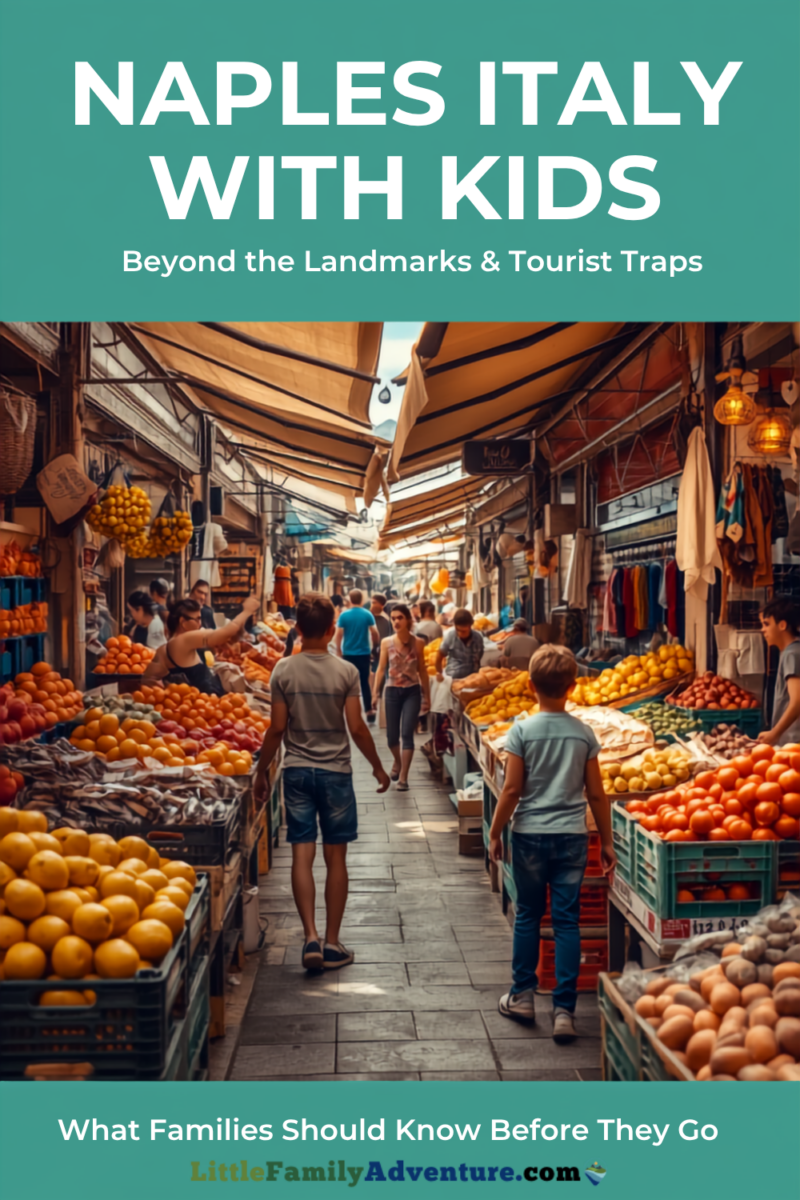
Markets are especially useful for families. They introduce local ingredients, seasonal habits, neighborhood conversation, and the daily work behind the food visitors enjoy. Kids can look for tomatoes, lemons, seafood, herbs, cheese, bread, and sweets, then compare them with foods they know from home.
Artisan shops offer another window into local life. Naples has traditions connected to craft, religious objects, tailoring, food, music, and handmade goods. Even a brief look into a workshop or specialty store can show children that culture is something people continue to practice.
Help Kids Understand Why Naples Feels So Layered
Naples can feel like several cities at once because different periods of history sit close together. Greek origins, Roman influence, medieval streets, baroque churches, royal history, working-class neighborhoods, and modern city life all shape the experience of walking through the city.
The city’s depth is recognized internationally, and the Historic Centre of Naples preserves traces of many eras within a living urban setting.
For children, this idea can be simplified without losing meaning. Parents might explain that Naples is like a tall stack of stories. Some are underground. Some are in buildings. Some are in food, music, street names, family traditions, and local celebrations.
This image helps kids understand why one street can feel ancient while another feels busy and modern. It also explains why Naples can seem crowded, beautiful, messy, surprising, and emotional in the same afternoon.
Families can make the city’s layered history easier to follow by choosing themes. One day might focus on ancient Naples. Another might focus on food and markets. A shorter visit might combine a neighborhood walk with one historic site and one viewpoint.
Views are useful too. From a higher point, kids can see the bay, rooftops, Vesuvius, church domes, apartment buildings, ferries, and crowded streets. Looking down at the city helps them understand how the sea, volcano, hills, and old center shaped Naples over time.
When you are weaving through unfamiliar streets and trying to reconnect a walk, viewpoint, or market stop to the bigger layout of the city, checking my location can make navigation feel much less overwhelming.
Use Food as a Doorway Into Culture
Pizza deserves its reputation in Naples, and most kids will be excited to try it. Still, food in the city can teach families much more than where to find a famous meal.
A bakery stop can introduce local sweets and morning routines. A market walk can show how seafood, produce, herbs, and cheese shape home cooking. A quick snack can open a conversation about street food and why fast, affordable meals matter in a busy city.
Food also helps children feel comfortable in a new place. Naples may seem overwhelming at first, but familiar rhythms such as breakfast, snacks, lunch, and dinner give structure to the day. Parents can use those pauses to let kids process what they have seen.
Instead of planning food stops only around famous names, families can ask better questions.
- What do local families buy in the morning?
- Which foods are eaten while walking?
- What ingredients appear again and again?
- How does the smell of a bakery change the feeling of a street?
These questions make meals part of cultural discovery. A child who chooses a pastry, notices a market stall, or watches dough being prepared is learning through experience.
For picky eaters, Naples can still work well. Pizza, bread, pasta, fruit, and simple pastries are usually approachable. More adventurous kids can try local specialties in small amounts, without making every meal feel like a challenge.
Make the Day Flexible for Young Travelers
Naples rewards curiosity, but families should plan with energy levels in mind, especially during warm months or when traveling with younger children.
Comfortable shoes are essential. (I’m currently loving these from Kizik.) Many of the most interesting areas are best explored on foot, and the surfaces can be uneven. Strollers may be difficult in narrow streets, crowded areas, and stair-heavy neighborhoods, so families with toddlers may prefer a child carrier for part of the day.
Short walking blocks work better than long forced marches. Parents can choose one area and explore it well rather than crossing the city repeatedly. A slower pace also makes it easier to notice details, stop for snacks, and avoid frustration.
Breaks matter. A shaded piazza, a café table, a waterfront pause, or a quiet church interior can reset the mood. Kids often absorb more when they are not being pushed from one stop to the next.
Families should also prepare children for the city’s energy. Naples can be louder and busier than some other Italian destinations. Explaining this ahead of time helps kids know what to expect.
It also helps to give children a say in the plan. Offer two choices: a market walk or a viewpoint, a pastry stop or a short museum visit, a neighborhood stroll or time near the water. Small choices give kids ownership and reduce travel fatigue.
Also be sure to insure your trip against the unexpected. Here’s everything you need to know about Travel Insurance for Europe Vacation.
Add Naples to a Bigger Family Italy Itinerary
Many family trips to Italy focus on Rome, Florence, Venice, or coastal destinations. Naples brings a different mood to the itinerary. It feels lived-in, expressive, historic, and closely tied to everyday routines.
Families already planning a family trip to Italy can use Naples as a vivid contrast to the country’s more polished museum cities and resort towns.
This contrast is valuable for children. It helps them see that Italy is not one single experience. A Renaissance square in Florence, a canal in Venice, a ruin near Pompeii, and a market street in Naples all tell different parts of the country’s story.
Naples also connects easily to several family-friendly experiences nearby. Pompeii and Herculaneum bring ancient history into focus. The bay offers views and ferry possibilities. The city itself provides food, street life, underground spaces, churches, and neighborhoods that can fill several rewarding days.
Families should avoid treating Naples only as a base for day trips. Even one full day focused on local streets, history, food, and neighborhoods can change how children understand southern Italy. Want more help? Get 18 Money-Saving Tips to Know When Planning Trip to Europe.
Help Kids Leave With a Story, Not a Checklist
The best family travel memories often come from moments that were not heavily planned. In Naples, that might be a child noticing a small shrine on a wall, tasting a warm pastry, hearing a street musician, asking about Vesuvius, or remembering the sound of a market in the morning.
Parents can help kids hold onto those memories by ending the day with simple questions.
- What surprised you?
- What smelled the best?
- Which street felt the oldest?
- What food would you eat again?
- What story would you tell someone at home?
These questions help children turn travel into memory. They also remind families that a successful visit is not measured by how many sites they completed.
Naples becomes easier to appreciate when families slow down and let the city reveal itself. Pizza and Pompeii may be the starting points, but the deeper reward is found in the connection between history and daily life. When kids can see that connection for themselves, Naples becomes a story they helped discover.
Plan Your Trip With Me
I’m not just a travel writer, I’m also a licensed travel advisor recognized as a USA Today 10Best Family Travel Expert. I’ve spent 15+ years covering family travel firsthand, and I bring that experience to the trips I help plan for readers like you. From family getaways to solo adventures, I can help you find the right destination, book with confidence, and skip the hours of research.
For more information about traveling with teens, read more on:
- Europe Cruise with Teens: Why Fall and Winter Beat Summer Every Time
- Plan Unforgettable Trip to Italy With Kids – 52 Top-Rated Attractions Worth Seeing
- Travel Insurance for Europe Vacation: Do You Need It?
- 18 Money-Saving Tips to Know When Planning Trip to Europe
- The Best European Gardens to Explore for Families in 2026

Leave a Reply