
You do not need to buy lots of products or spend a lot on renovations to winterize your home. The best way to start is by focusing on problems you can see, feel, or test yourself.
Early fall is a good time to look for drafts, check your insulation, test your heating system, protect pipes, and compare repair options before cold weather makes small problems urgent.
This article contains affiliate links. We earn from qualifying purchases.
When getting ready for winter, start by inspecting your home, keep up with what already works, seal or repair what you can, and only think about bigger upgrades if your home really needs them. This approach helps you avoid unnecessary spending, cut down on energy waste, and prevent costly damage from the cold.
1. Check Drafty Windows and Doors Before Assuming They Need Replacing
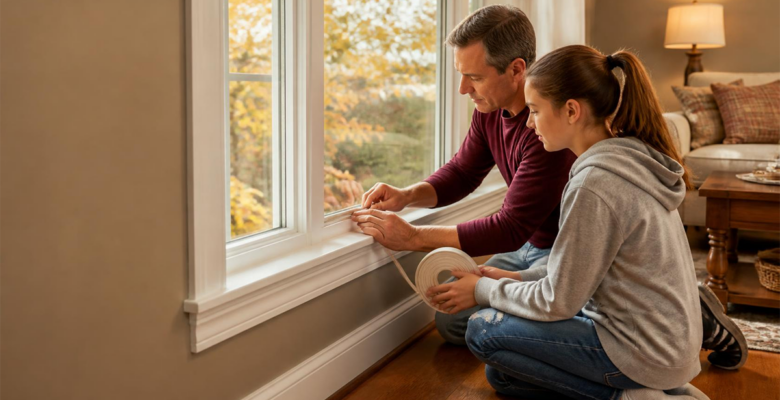
If you feel a draft near a window, it does not always mean you need to replace the whole thing. Check the parts that are supposed to seal it. Open and close each window and door, make sure the locks pull them tight, and look for weatherstripping that is cracked, flat, or missing.
If new weatherstripping and simple fixes do not stop drafts, make windows hard to use, let in water, or if the frames are in bad shape, compare the cost of repairs with a new replacement window before spending more on temporary fixes.
You can use a simple paper test to find a loose seal. Close a window or door on a piece of paper and pull it gently. If the paper slides out easily in one spot but not in others, that spot might need fixing.
Try to tell the difference between actual drafts and just feeling cold near the glass. Older or less efficient windows can make the area next to them feel chilly even if no air is leaking. Adding more caulk will not solve this problem.
The Department of Energy recommends checking caulking and weatherstripping around windows and doors as part of a basic home energy assessment. DOE also estimates that heat gain and loss through windows account for about 25% to 30% of residential heating and cooling energy use.
The key is to figure out if you just have a small sealing issue or if the window itself is starting to break down.
A Quick Home Diagnosis Before You Spend on Renovations
| Problem | What to inspect first | Recommended solutions |
| Draft around a window sash | Lock, fit, and weatherstripping | Adjust or replace the worn seal |
| Air around fixed trim | Cracked or missing sealant | Seal an appropriate stationary gap |
| Cold upstairs bedroom | Attic access, insulation, and airflow | Investigate the room before heating the whole house more |
| Weak airflow from a vent | Filter and blocked registers | Clean, replace, or clear |
| One room stays cold | Window, vent, and insulation | Diagnose locally before raising the thermostat |
| Exposed pipe in a cold area | Location and insulation | Protect it before freezing weather |
2. Seal the Cheap Air Leaks That Are Easy to Miss
People usually focus on windows and doors because their drafts are easy to spot, but warm air can also leak out through many smaller gaps.
Look at the attic hatch, gaps where pipes or wires go through walls or ceilings, open spots around door trim, and anywhere your home connects to an unheated space.
Use weatherstripping for things that move, like windows and doors. Use caulk or another sealant for small gaps that do not move.
Do not seal every opening just because you see it. Some things, like furnaces, chimneys, vents, and certain electrical parts, need special clearances or materials. If you are not sure what an opening is for, find out before sealing it.
Taking the time to find and seal leaks can pay off. ENERGY STAR says sealing air leaks and adding insulation can save up to 15% on yearly energy bills, though your results may vary depending on your home and climate.
You do not need to seal every seam you see. The main goal is to fix leaks you cannot control before spending money on bigger projects.

3. Check the Attic Before Buying More Room Heaters
If your upstairs rooms feel cold every winter, the issue might be above the room, not inside it.
In winter, warm air can get pushed through gaps into the attic, and if insulation is missing or disturbed, more heat escapes through the ceiling.
Start with the attic access. Does the hatch or pull-down stair close tightly? Is it insulated well? If you can safely get into the attic, look for insulation that is thin, squashed, missing, or pushed aside, and check for gaps around pipes, wires, or ducts. A roof or moisture problem should not simply be buried under another layer.
Do not rely on a single insulation target from an online list. The right amount of insulation depends on your climate zone and what you already have. For example, the DOE recommends different attic R-values for different parts of the country. You can check yours here.
Pay attention to specific rooms. If one child’s bedroom is always colder, check the vent, window seal, and insulation above that room before turning up the heat for the whole house.
4. Test the Heating System Before You Depend on It
Turn on your heat in early fall, when fixing a problem is still just inconvenient, rather than an emergency.
Let your heating system run long enough to see if your house warms up as it should. Start with the basics:
- Replace or clean the filter if needed
- Make sure vents are not blocked by furniture or rugs
- Check that the thermostat works right.
Watch for rooms that stay much colder than others, strange noises, odd smells, the system turning on and off a lot, or not reaching the set temperature. These signs mean you should look into the problem instead of just turning up the thermostat.
ENERGY STAR recommends annual pre-season heating checkups and specifically suggests doing them in fall before contractors become busiest. Regular filter checks are part of the same maintenance routine.
Testing early gives you time to book service and compare your options, instead of having to rush when the first cold snap hits.
5. Stop Heating the Whole House Harder Than Necessary
After you fix leaks and equipment issues, think about how your family uses the heat day to day.
Most local experts say you can save up to 10% on heating by setting your thermostat 7°F to 10°F lower for eight hours a day. Your actual savings will depend on your climate, heating system, home, and daily habits, so use this number as a guideline, not a promise.
A programmable or smart thermostat can help if your family has a regular schedule. But if everyone keeps changing the setting because the house feels uncomfortable, it will not help much.
Before turning up the thermostat, check that furniture is not blocking vents, long curtains are not covering radiators or registers, and that a cold room does not have its own insulation or airflow problem
Most importantly, do not turn up the heat for the whole house just because one bedroom or office is cold. Usually, a cold spot means you need to check that specific area.
6. Protect Pipes and Check Winter Safety Basics
Some winterizing tasks can save you money by helping you avoid bigger, more expensive repairs later.
Pipes in garages, crawl spaces, outside walls, and other unprotected spots can freeze in very cold weather. Before winter, find these pipes and insulate them if needed.
If you travel during cold weather, do not turn the heat completely off just to reduce the heating bill. It’s usually recommended to leave heat on and set the thermostat no lower than 55°F when a home will be unattended in freezing conditions.
Disconnect garden hoses before it gets cold enough to freeze, and follow the right steps for outdoor faucets and irrigation systems in your area. Heating season is a good time to test your smoke and carbon monoxide alarms, too.
These tasks might not lower your next utility bill, but stopping frozen pipes or catching a safety issue early can save you from much bigger problems later.
7. Check Current Rebates Before Paying Full Price
If your winter checkup shows you need a bigger efficiency project, look for available help or rebates before you sign any contracts.
There is an important change for homeowners planning projects in 2026. The federal Energy Efficient Home Improvement Credit is no longer available for property placed in service after December 31, 2025, according to the IRS. However, some other initiatives may still be available. The Department of Energy continues to list Home Energy Rebates programs as well as the Weatherization Assistance Program for eligible households, while availability and requirements vary by state, territory, Tribe, income level, and type of improvement.
All the information regarding your eligibility and how to apply can be found here.
The important part is timing. Check before work begins because some programs may require eligibility confirmation, approved equipment, specific contractors, an assessment, or other steps before a project qualifies.
Spend Your Winterization Budget in the Right Order
The cheapest fix for winter is not always the best, and the biggest upgrade is not always the right answer either.
Begin with the free checks. Keep up with what already works. Seal or fix a problem when you know what is causing it. If the same issue keeps coming back, or you find damage, moisture, equipment failure, or not enough insulation, look into a bigger fix before spending another winter on temporary solutions.
Doing this work before the first freeze gives you something emergency repairs rarely provide: time. You can compare solutions, check available assistance, and put your winterization budget toward the problems that are actually affecting your home.

Leave a Reply