
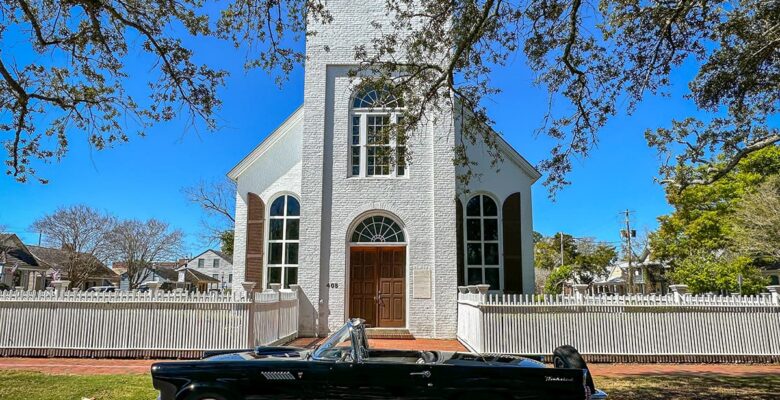
I did not plan to fall in love with Pensacola. I went because my eldest son lives there now, and any excuse to visit him is a good one. But what I expected to be a relaxed beach trip turned into one of the most genuinely fascinating destinations I have covered in fifteen years of travel writing.
Here is the thing no one tells you about Pensacola before you go: it is America’s First Settlement. Not a loose tourism slogan. Not a creative stretch. A documented, archaeologically verified fact that places this Gulf Coast city at the very beginning of the American story, decades before the places you studied in school.
This article contains affiliate links. We earn from qualifying purchases.
For families traveling with teenagers, that combination is almost unfairly good. You get the beach. You get the history. You get the kind of stories that make your kid put down their phone and ask a question you did not see coming. And in 2026, as the nation celebrates the America 250 milestone, there has never been a better time to visit.

My son has lived in Pensacola long enough to know where locals actually go, and throughout this article I will share his recommendations alongside my own observations. Whether you are planning a spring break, a summer road trip, or a long weekend getaway, here is everything you need to know about exploring Pensacola with teenagers. Then when you’re ready check out this Pensacola itinerary with teens for a long 3-4 day weekend.
Wait!! Pensacola Is America’s FIRST Settlement?
Yes. And once you see the numbers laid out, it is hard to understand why this is not more widely known.
In 1559, Spanish conquistador Don Tristán de Luna y Arellano sailed into Pensacola Bay leading an expedition of more than 1,400 soldiers, colonists, enslaved people, and Aztec Indians aboard 11 ships from Vera Cruz, Mexico. This was not a small scouting party. It was a full-scale colonization effort, and it predates the Spanish settlement at St. Augustine by six years and the English settlement at Jamestown by 48 years.
That makes Pensacola the site of the first multi-year European colonial settlement ever archaeologically identified in the continental United States.
The colony’s story did not end neatly. Weeks after arrival, a powerful hurricane struck on September 19, 1559, killing an unknown number of settlers, sinking six ships, grounding a seventh, and destroying the food supply. After two years of struggle with famine and hardship, Spanish rescue ships returned the survivors to Mexico. The settlement was abandoned.
Because it did not survive, most history books long defaulted to St. Augustine, founded in 1565, as the country’s oldest continuously occupied European city. But Pensacola holds the earlier date, and in 2015 the University of West Florida’s archaeology program confirmed it, identifying the exact location of the Luna settlement in a developed neighborhood within the modern city.
This nuance is one of the best conversation starters I have ever had with a teenager on a trip. What counts as “first”? Does a settlement have to survive to matter? How does a single hurricane change the course of an entire nation’s history? These are the kinds of questions that turn a beach vacation into something your family is still talking about years later.
City of Five Flags
There is a second layer to Pensacola’s history that makes it even richer for older kids: its nickname, the City of Five Flags. Spain, France, Great Britain, the Confederate States of America, and the United States have all ruled Pensacola at different points in its history. Each left a distinct mark on the architecture, the food, and the culture of the city. No other city in the continental United States can claim that kind of layered national identity.
With the nation’s 250th birthday being celebrated throughout 2026, Pensacola is actively leaning into its role as America’s origin story, including a partnership with St. Augustine titled “From the 1500s with Love” that highlights the Florida coast’s place at the beginning of American history (Visit Pensacola). There is no better year to visit.
Start Here: The America’s First Settlement Trail (Free and Walkable)
Before you pay admission to anything, walk the trail. It costs nothing, takes about two to three hours at a relaxed pace, and gives you the narrative framework that makes every other stop in the city land harder. Plus along the route, you’ll find local coffee shops, eateries, shops, and more to explore.
The America’s First Settlement Trail is a free, self-guided three-mile marked path through downtown Pensacola and the Pensacola Historic District, with twenty designated stops and more than seventy individual points of interest. Sites along the route date as far back as 1756, when the Spanish built Fort San Miguel in what is now the downtown core. Pensacola’s historic district was the first to be designated within the city and is among the oldest in the state of Florida.
For families with teenagers, the self-guided format works particularly well. Your teens can lead the navigation, challenge each other to find the markers, and move at their own pace rather than following a group tour. My son’s advice, having walked it himself: download the PDF map before you leave the house.
Start early in the morning while the streets are quiet and the light is good for photography. The trail winds past colonial-era archaeological excavation sites, 18th-century street layouts drawn by British engineers, cemetery grounds in use since the 1700s, and buildings that survived fires, hurricanes, and five changes of government. It is the real thing, still standing, still readable by anyone who slows down enough to look.
One note for 2026 visitors: Palafox Street, Pensacola’s main downtown corridor and one of the American Planning Association’s top ten great streets in America, is currently undergoing an active revitalization. All businesses are open and the street is wonderful to explore, but be aware that construction is visible along certain stretches.
Historic Pensacola Village: Where the History Comes Alive Indoors and Out
If the trail gives you the story from the outside, Historic Pensacola Village lets you walk inside it, which also makes it an excellent option on a rainy day when you need to keep the itinerary moving.
The village encompasses 8.5 acres and 28 properties in the heart of downtown, 11 of which are open to the public. A single admission ticket, $12 for adults and $7 for children ages 4 to 14 with children under 3 free, covers entry to multiple properties and remains valid for seven full days from the date of purchase. That is a meaningful value for families: if your teens fall in love with one exhibit and want to return the next day, you are already covered.
What is inside? The Pensacola Museum of History anchors the complex and covers more than 460 years of recorded history through artifacts tied to the city’s Spanish, French, British, and American chapters. The museum, housed in a grand 1908 building, is the one teenagers tend to remember longest. Its collection runs from a petrified cat to WWII paratrooper personal effects, and the unexpectedness of it holds attention in a way that traditional exhibit cases sometimes do not.
The Museum of Industry tells Pensacola’s economic development story through fishing, brickmaking, lumber, and transportation, complete with a train display that consistently pulls in teenagers who claim they are too old to care about trains. The Museum of Commerce recreates the storefronts of an early Pensacola commercial district, including old children’s toys, hardware displays, and merchant signs that make the past feel tangible rather than distant.
Throughout the village, period-dressed interpreters go about their historical routines, tending gardens, demonstrating crafts, and answering questions in character. For teenagers old enough to engage with immersive history rather than be confused by it, this elevates the entire experience. Grab a visitor map at any museum service desk when you arrive. The properties spread across several blocks, and it is easy to miss one without it.
The admission ticket also includes the Pensacola Children’s Museum, which has two floors of hands-on exhibits including a Colonial Classroom and a Native American Village that work well for families spanning a range of ages.
Rainy day note: The entire Historic Pensacola Village complex is an ideal rain day anchor. Between the Museum of History, the Museum of Commerce, the Museum of Industry, and the Children’s Museum, a family with older kids can easily fill three to four hours entirely indoors without repeating a single exhibit.
Historic Pensacola Village Dining: Fueling Up Nearby
After a morning in the historic district, my son pointed me toward a few spots the locals actually use rather than the ones listed first in search results.
The Garden at Palafox is a food hall on Palafox Street that functions as a genuine gathering spot for the neighborhood. Multiple vendors operate under one roof, each doing something different, which is particularly useful when your party cannot agree on what they want. On the afternoon we visited, the options ranged from pizza cones and sushi to tacos and specialty coffee. It is a low-pressure way to feed a group with different appetites.
McGuire’s Irish Pub is a Pensacola institution you need to experience at least once, not only for the food but for the atmosphere. The walls are lined with more than a million dollar bills signed by customers over decades, and Blue Angels memorabilia covers nearly every surface, creating a kind of informal aviation museum layered over a lively Irish pub. Order the Reuben sandwich. My son is insistent on this point and I will not argue with him. It is legitimately one of the best Ruebens I have eaten anywhere.
Lucy’s on the Square earned a permanent spot on my list thanks to a local couple I met at an art gallery’s Tuesday recommendation: if your visit falls on a Tuesday, their Taco Tuesday deals are worth planning around. Lively atmosphere, generous portions, and a menu that works for teenagers who want real food rather than resort-adjacent options.
Fort Pickens: The Most Unexpected Teen Activity in Florida
I want to tell you about the drive to Fort Pickens before I tell you about Fort Pickens itself, because the drive is part of the experience.
You leave downtown Pensacola and cross onto Santa Rosa Island heading toward the beach. Then you keep driving past the hotels and restaurants, past the last commercial strip, and the landscape begins to change.
The condos disappear.
The vendors disappear.
The road narrows and on both sides of you there is nothing but coastal scrub, wind-shaped sea oats, open sky, and glimpses of emerald water through the dunes. By the time you reach Fort Pickens at the western tip of the island, you feel genuinely removed from the urban world you started in. It is one of those rare moments in coastal travel where the scenery does the work without any help from development.
If you love beaches the way I do, undeveloped and quiet with nothing behind you but protected land and open water, this stretch of Gulf Islands National Seashore is the answer. The National Seashore is the longest stretch of federally protected coastline in the United States, which means no condos, no beach vendors, no boardwalk shops. Just the Gulf, the sand, and whatever wildlife happens to be moving through that day.
And then, at the end of that drive, there is a fort.
Fort Pickens is a massive pre-Civil War brick fortress that garrisoned Union troops during the Civil War and, in its most storied chapter, served as the prison of Geronimo, the Apache leader who surrendered to U.S. forces in 1886 following years of resistance in the Southwest. The fortress sits at the edge of one of the most beautiful beaches in the country, and the contrast between the ancient brick and the turquoise Gulf behind it is the kind of thing you stop and stare at before you even reach for your camera.
If you have already visited Fort Morgan in Alabama (see my article on that here), you will recognize the scale and drama of a 19th-century coastal fortification immediately. Fort Pickens operates in a similar spirit but on a grander scale, with additional layers of Civil War and Native American history that lend it a particularly rich narrative for older kids.
Ranger-led tours are offered daily and are absolutely worth joining. The storytelling is strong, and rangers do a particularly thoughtful job contextualizing Geronimo’s imprisonment without flattening the complexity of that history. If you prefer to explore at your own pace, self-guided options and informational panels throughout the fort make it easy to navigate independently.
For teenagers, the Geronimo connection is often the hook. Many students encounter the Apache wars in middle or high school history, and standing in the actual physical space of that story lands differently than reading about it. Beyond the history, the fort’s sheer scale commands attention. The tunnels, the cannon mounts, the thickness of the walls, and the views of Pensacola Pass from the upper levels are impressive to anyone willing to climb up and look.
Practical logistics:
- Fort Pickens sits within Gulf Islands National Seashore. The entrance fee is $25 per vehicle. An America the Beautiful Annual Pass covers this and is worth purchasing if your family visits national parks more than once a year. Note: I buy mine at REI, so I build up my members rewards.
- Wear real shoes with closed toes. The interior terrain is uneven and flip flops will slow you down and create real fall risk.
- Bring water and sunscreen. There is minimal shade outside the fortress walls.
- Plan for at least two to three hours. Most families end up staying longer than they planned.
- After the fort, the beach along this stretch of the National Seashore is among the most pristine on the Gulf Coast. Swim, walk the dunes, and let the afternoon slow down.
The National Naval Aviation Museum: Free, Epic, and Actually Teen-Approved
The word “museum” undersells this place so dramatically that it deserves a reframe. The National Naval Aviation Museum at Naval Air Station Pensacola is one of the largest aviation museums in the country, and it is completely free to the public.
More than 150 restored aircraft are on display, spanning the full arc of naval aviation from the earliest biplanes to modern fighter jets. Over 4,000 artifacts fill the space, and the interactive exhibits include genuine flight simulators and a cockpit trainer that teenagers can climb into and operate. The museum traces naval aviation history from the first pilots trained at Pensacola in 1914, through John Glenn and Neil Armstrong, both of whom received their early training at NAS Pensacola, through the present day.
On clear-weather mornings, the Blue Angels, the U.S. Navy’s flight demonstration team based at NAS Pensacola, practice Tuesdays and Wednesday at 10:30am (March to November) on the flight deck behind the museum. Practice sessions are viewable from the museum grounds at no cost. If your timing lines up, watching the Blue Angels from the museum’s flight line is one of the most spectacular free experiences available anywhere in American travel. Also check the NAS Pensacola schedule before you visit to confirm show days.
This is also your best rainy day backup plan. The museum is almost entirely indoors, massive in scale, and interactive enough to hold a teenager’s attention for a full morning even in poor weather.
Important logistics for 2026 visitors: As of this writing, accessing NAS Pensacola requires entering via the Main Gate on Blue Angel Parkway, visiting the Visitor Control Center to complete paperwork for base access as a visitor, then exiting and re-entering through the West Gate for museum access. Build an extra 30 to 45 minutes into your schedule. Every visitor 18 and older must present a Real ID compliant driver’s license or valid passport. Only clear bags are permitted inside the museum.
After the museum, the Pensacola Lighthouse is a short drive away and well worth adding. Built in 1859 and standing 177 steps tall, it offers panoramic views of Pensacola Pass and the Gulf. Note that closed-toe shoes with backs are required to climb. No flip flops or open-back sandals.
Pensacola Beach: The #1 Beach That Actually Earns It
Everything above is why Pensacola is worth the trip. The beach is why you stay.
Pensacola Beach on Santa Rosa Island has been ranked among the top beaches in the country by Condé Nast Traveler, TripAdvisor, Dr. Beach, and the Travel Channel. The sand is composed of ground quartz crystal, which gives it that bright white color and the unusual property of staying significantly cooler than regular sand, a meaningful difference when you are walking barefoot in afternoon heat.
But here is what made me stop and just stand there: from the Fort Pickens side of Santa Rosa Island, looking back toward the Gulf, there is nothing behind you. No hotels stacked up on the dune line. No umbrella rental carts. No speakers pumping music across the beach. The Gulf Islands National Seashore designation means this stretch of coastline stays protected and undeveloped, and for anyone who loves beaches for what they actually are rather than what gets built around them, it is a revelation. My son had warned me. I still was not prepared.
For families, the beach offers more than swimming. The Pensacola Beach Pier extends 1,471 feet over the Gulf and regularly yields catches of king mackerel, cobia, and pompano. Dolphin cruises operate from Pensacola Beach Boulevard with near-guaranteed sightings in warmer months. Paddleboard and kayak rentals are available throughout the beach area.
Where to eat near the beach and waterfront:
The Wharf is the spot my son sends his own visitors for fresh Gulf oysters. The menu is straightforward, the oysters are local, and the waterfront setting makes it feel like a reward after a long day of sightseeing. If you eat oysters, do not skip this.
Joe Patti’s Seafood has operated in Pensacola since 1931 and is the seafood market the locals use when they want the freshest catch available. If you are staying somewhere with a kitchen or even just a kitchenette, a visit to Joe Patti’s and an evening cooking what you bought is one of the best meals you will have on the trip. My son and I consider it non-negotiable.
Rainy Day Options in Pensacola
The Gulf Coast does get rain, usually fast-moving afternoon storms rather than all-day soakers, but it pays to have a plan.
Indoor activities worth knowing about:
The Pensacola MESS Hall (Math, Engineering, Science, and Stuff) is a hands-on science museum where kids design their own experiments and work through interactive STEAM exhibits. It is genuinely engaging for teenagers rather than just for younger kids, and it is a strong half-day option when the beach is not cooperating.
Historic Pensacola Village (covered above) anchors a full rainy morning easily, with multiple museums under its admission umbrella spread across the downtown blocks.
The National Naval Aviation Museum is the most impressive indoor option in Pensacola by a wide margin, particularly for families whose teens have any interest in aviation, engineering, or military history.
The Pensacola Museum of Art on Jefferson Street hosts rotating exhibits, workshops, and a permanent collection that rewards a slow hour of browsing. It is a quieter option for families who want to decompress after high-energy days.
For teenagers who need something less structured, Pensacola has escape rooms, bowling, and axe throwing venues downtown, and my son’s assessment of the local Grizzly Axes location is enthusiastically positive.
FAQ
Is Pensacola older than St. Augustine? In terms of the first documented European settlement attempt, yes. Pensacola was settled in 1559, six years before St. Augustine’s founding in 1565. However, St. Augustine is the oldest continuously occupied European city in the continental United States, since the original Pensacola settlement was abandoned after two years following the 1559 hurricane. Both claims are accurate and measuring different things.
Is Historic Pensacola Village worth it for families with teens? Yes, particularly because a single admission ticket covers multiple properties for seven full days. Older teens engage well with the history museum’s unusual exhibits, the costumed interpreters, and the Museum of Industry. The museum ticket also covers the Pensacola Children’s Museum for younger siblings. Budget two to three hours for the full experience, and know that it doubles as a solid rainy day option.
Can teens do Fort Pickens? Fort Pickens is genuinely one of the best teen activities on the Gulf Coast. The Geronimo history, the Civil War-era scale, the ranger storytelling, and the beach access immediately after make it a natural fit for older kids. Wear real shoes, not flip flops, and plan for more time than you think you need.
How much does it cost to visit Pensacola with a family? Pensacola has an unusually high ratio of free and low-cost activities for a coastal destination. The Naval Aviation Museum, the Settlement Trail, and with a National Park Pass, Fort Pickens are all free or covered by the annual pass. A family of four could cover the major historic sites in two days for under $100 in admissions, making it one of the more affordable educational beach vacations in the Southeast.
Is the National Naval Aviation Museum good for older kids? It is one of the best museums in the country specifically for teenagers. The flight simulators, cockpit trainers, and aircraft collection hold attention in a way that traditional history museums often do not. The Blue Angels connection adds a contemporary hook that makes the history feel relevant. Plan for at least two hours, and check the schedule for Blue Angels practice days before your visit.
What do you do in Pensacola on a rainy day? The Naval Aviation Museum is the most impressive indoor option and can fill a full morning easily. Historic Pensacola Village covers multiple indoor museums under one admission ticket. The Pensacola MESS Hall is ideal for teens who like hands-on STEAM experiences. Downtown also has escape rooms and axe throwing if you want something more high-energy. For lower-energy, there are a number of role play game stories offering scheduled sessions.
Packing for This Trip
- Water shoes for Fort Pickens and lighthouse exploration — Closed-toe shoes are recommended inside the fort and required at the lighthouse
- Lightweight dry bag for beach and kayak days
- Reef-safe sunscreen — Required year around
- Refillable water bottles — Essential for the Fort Pickens walk in warmer months
- Clear stadium bag — Required for National Naval Aviation Museum access
Disclosure: My visit to Pensacola included complimentary admission to Historic Pensacola Village courtesy of Visit Pensacola. All opinions, observations, and enthusiasm about that drive out to Fort Pickens are entirely my own.

Leave a Reply