
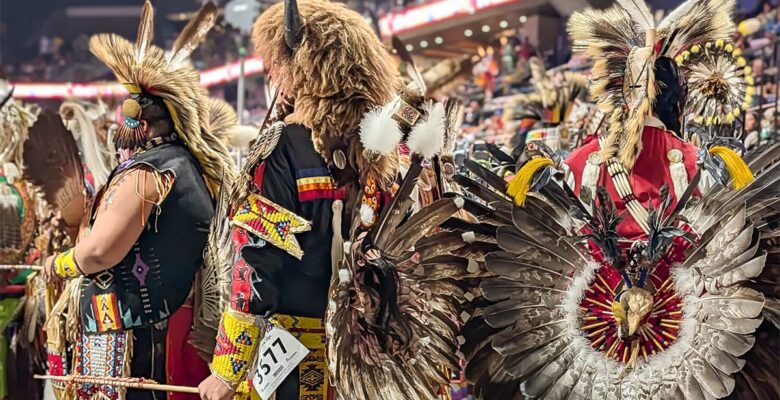
Yes, you are welcome at a powwow, and the Black Hills Powwow in Rapid City, South Dakota is one of the best places to experience your first one.
This past October, over the weekend that included Indigenous Peoples Day, I attended my very first powwow: He Sapa Wacipi Na Oskate, better known as the Black Hills Powwow. Travel South Dakota calls it the biggest powwow in the United States, drawing dancers, singers, artists and spectators from across North America.
This article contains affiliate links. We earn from qualifying purchases.
I’m not Indigenous, and I’ll be honest. Before I went, I wasn’t sure I was allowed to be there. Would I be welcome? Would I accidentally do something disrespectful?

The answer is right in the powwow’s tagline: “Come Dance with Us.” It’s an open invitation, and after attending, I can tell you it’s sincere.
If you’ve ever wanted to attend a powwow but felt unsure, here’s what I learned, including the etiquette every visitor and family should know before they go.
What Is the Black Hills Powwow?
The Black Hills Powwow is a three-day celebration held every October at Summit Arena at The Monument in Rapid City. The 38th annual powwow took place October 9 to 11, 2026.
Held in the Black Hills, or Paha Sapa, the powwow honors the cultural legacy of the Lakota, Dakota and Nakota peoples and invites dancers from other tribal nations to “come dance with us.” In 2024, the South Dakota Legislature noted that it draws more than 18,000 visitors, about 20 drum groups and more than 100 vendors, with 36 categories of singing and dancing.
The scale is hard to describe until you see it. During this year’s grand entry, more than 3,000 dancers filled the arena floor.
Beyond the dance competitions, the weekend includes a fine arts show, the He Sapa Win pageant, vendor booths, hand game tournaments, and a Saturday morning parade through downtown Rapid City.
What Does Wacipi Mean?
Wacipi is Powwow in the Lakota language. It refers to a social event that brings people together to sing and dance in celebration.
That definition is the heart of why a powwow matters. A wacipi connects Indigenous people back to their culture and identity. As a visitor, you are a guest at that celebration, which shapes every bit of etiquette that follows.
Start with Wacipi 101
If it’s your first Black Hills Powwow, start with Wacipi 101. This introduction is offered during the Black Hills Powwow for visitors who want to understand what they’re about to see.
Two dancers from the Oglala Lakota, Oglala Sioux Tribe, led my class: Karl Eagle Bull, a men’s fancy dancer, and Santana Young Man Afraid of His Horses, a former Miss He Sapa Win and women’s fancy dancer.
They patiently walked a room full of visitors like me through what a powwow is, how it works and how we could take part with respect. Hearing it from dancers themselves made all the difference. I walked into the arena feeling welcomed, not like an outsider.
(Note: not all powwows offer this type of class for visitors. Check the event schedule for the event you are attending, and if one is offered, I highly encourage you to attend.)
The Moment That Stayed with Me: The Veterans Grand Entry
The Veterans Grand Entry is the moment I’ll carry with me longest.
When the announcer asked us to stand for the Veterans Grand Entry, I rose with everyone around me. Among the veterans was a man in his USMC Sergeant dress blues, eagle feathers hanging from his cover and his face painted (I didn’t get a clear picture).
I have family and friends who serve in the military, so seeing him carried extra weight for me. There he was, with a foot in both worlds. That moment caught me completely off guard. The next day, his image was across my social media feed with others offering support and empowerment.
The Heartbeat of the Powwow: The Drum
The drum is the beat of the people, and it drives every dance.
You’ll see drum groups seated around the arena, singing and drumming as dancers move to their rhythm. Drum groups aren’t just accompaniment. They drive the energy of the event and provide the music for the dances. They are judged during the powwow right along with the dancers. In the Wacipi 101 class, I learned that dancers are not competing against each other, but instead are competing against the drum. Dancers must know the songs, be in tune with the beat, and stop when the drumming stops.
Dances You’ll See
Grand Entry brings the dancers into the arena together. It’s a breathtaking sight when the floor fills with color and movement. It begins with the Veterans’ Grand Entry and then the Dancer Grand Entry.
The main dance styles you’ll see include:
- Men’s Traditional
- Women’s Traditional
- Men’s Fancy Dance
- Women’s Fancy Dance
- Women’s Jingle Dress Dance
- Men’s Grass Dance
Each style has its own regalia and its own movement. There are other dance styles, but these are the main ones you’ll see. For me, watching the jingle dress and grass dancers in person was a highlight.
Powwow Etiquette For Visitors: What You Should Know
Powwow etiquette for non-Indigenous people comes down to one idea: you are a guest at a celebration of culture and identity, so follow the lead of the people hosting it. Here’s what I learned at Wacipi 101.
- Listen to the announcer. The announcer, or MC, guides the whole event. Stand when you’re asked to, such as during the Veterans’ Grand Entry.
- It’s regalia, not a costume. Dancers wear regalia. Using the right word is a simple way to show respect.
- Don’t touch regalia. Admire it with your eyes, not your hands.
- Never touch eagle feathers. Visitors who aren’t Indigenous are not allowed to touch eagle feathers. If you see one on the ground, alert someone, but don’t pick it up.
- Ask before photographing individuals. Always ask a dancer before taking their photo. Wide shots of groups at a powwow are okay.
- Don’t walk between the drums and the dancers. Give the drum groups and the dance floor their space. Visitors are not allowed in the dance area unless invited to participate during an intertribal dance.
- Leave the alcohol behind. No alcohol is allowed on powwow grounds, and anyone who is intoxicated will be asked to leave.
- Dance when you’re invited. Registered dancers compete, but the general public can join intertribal dances. Check the published schedule and/or listen for the MC to announce them.
- Keep an open mind. Be respectful and open to learning new cultural practices. If you don’t know something, ask for information or help.
- Support the community. Shop the vendors and try the cultural foods offered at the wacipi.
Shop the Vendors and Try the Food
Supporting Indigenous vendors is one of the easiest ways to give back while you’re there. Be sure to bring cash as not all vendors accept credit cards.
Ledger art was also popular at the show, with a few vendors selling it. These pieces above are from Joanne Brings Thunder, an artist from the Wind River Reservation in SW Wyoming.
The style grew out of Plains hide painting, where warrior artists recorded battles and hunts on buffalo hides. As the buffalo disappeared and tribes were forced onto reservations in the late 1800s, artists turned to paper, often pages from old accounting ledgers, military records and other discarded books that came from traders, government agents, missionaries and soldiers through trade, gifts or salvage.
I came home with a beautiful pair of abalone shell earrings, handmade by Thomas of PT Bling. Knowing the artist made them himself makes them one of my favorite souvenirs.
Buying directly from Indigenous artists means your money goes straight to the person who made the piece, and you go home with something far more meaningful than a mass produced trinket. Bring cash as a backup, and set aside a souvenir budget before you start browsing, because it’s easy to fall in love with more than one piece.
For food, Malissa’s Frybread food truck was a popular stop. The line was extremely long on Friday night. I can get frybread and Indian tacos at home in Oklahoma City, so I skipped it this time. If you’ve never tried them, though, I highly recommend you get in line before you are hungry.
Tips for Bringing Your Family
A powwow is a wonderful cultural experience for kids and teens, and a little preparation helps everyone enjoy it.
- Talk through the etiquette before you go. Kids are naturally curious, so explain why regalia and eagle feathers are not to be touched.
- Set phone and camera rules. Teens especially will want to record. Remind them to ask before photographing individuals and to stick with wide shots of groups.
- Take Wacipi 101 together. It gives the whole family a shared understanding and plenty to talk about afterward.
- Watch for the intertribal dances. When the MC invites the public onto the floor, it’s a memorable way for families to join in.
- Plan a vendor budget. Let kids choose a handmade piece to take home and talk about the artist who made it.
- Try the food. Frybread is a delicious introduction to the cultural foods offered at the powwow.
Plan Your Visit
The Black Hills Powwow is held the first weekend in October at The Monument in Rapid City. Check the Black Hills Powwow Association and Visit Rapid City for next year’s dates, tickets and the Wacipi 101 schedule.
Where to stay: The DoubleTree by Hilton Rapid City Downtown Convention Center sits right next door to The Monument at 505 N. 5th Street. This is where I stayed on this visit. You can walk to the powwow, skip the parking hunt and easily head back to your room between sessions. October powwow weekend is busy, so book here early.
A second option nearby is Elevation Inn & Suites, Trademark Collection by Wyndham.
Extend your trip: Rapid City is a natural base for exploring the Black Hills and beyond, so plan a few extra days. Head east to see the striking buttes of Badlands National Park, or drive south into the Black Hills to spot bison in Custer State Park, South Dakota’s largest state park. Continue south to Hot Springs for more family fun, or find more ideas in our guide to the best Midwest family road trips.
Before your trip: Listen to this Powwow Spirit Podcast on Travel South Dakota Stories with Santana Young Man Afraid of his Horses, former Miss Oglala Lakota Nation winner and presenter at the Wacipi 101 class and Ruben Little Head, MC at the Black Hills Powwow for 17 years to hear more sounds and stories from past events.
Final Thoughts: Come Dance with Us
I went to my first powwow unsure whether I belonged. I left with a deeper respect for Lakota culture, a pair of handmade earrings and a moment during the Veterans Grand Entry I’ll never forget.
If you’ve been waiting for permission, consider this it. Take the Wacipi 101 class, follow the etiquette and accept the invitation the Black Hills Powwow extends to everyone: Come Dance with Us.
Powwow FAQ
Plan Your Trip With Me
I’m not just a travel writer, I’m also a licensed travel advisor recognized as a USA Today 10Best Family Travel Expert. I’ve spent 15+ years covering family travel firsthand, and I bring that experience to the trips I help plan for readers like you. From family getaways to solo adventures, I can help you find the right destination, book with confidence, and skip the hours of research.
Disclaimer: Thank you to Visit Rapid City for inviting me to come and experience my first powwow. I loved the experience and hope this will inspire others to add one to their to-do list very soon. Activities, meals, and lodging were provided for editorial purposes. All opinions are my own.

Leave a Reply