
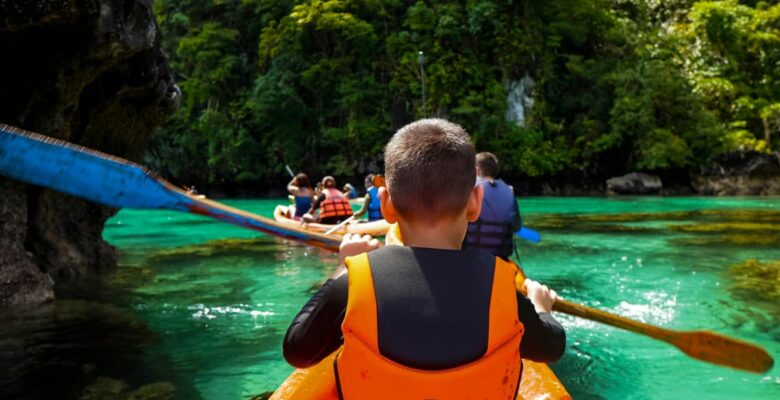
Paddling is one of the few outdoor activities a family can grow into year after year. A four-year-old can ride safely in the bow of a stable kayak while a parent strokes from the stern. A teenager can take their own paddle, push for a longer distance, and feel the kind of independence that’s hard to find on a screen. Almost every age in between fits somewhere into the picture, which is why so many families end up making paddling a regular weekend habit instead of a one-off summer experiment.
Getting there takes a little planning. The first few outings shape how your kids and teens feel about the water for years afterward. A frustrating first day on a windy lake can sour the whole idea. A relaxed first day on calm water, with the right gear and realistic expectations, has the opposite effect. Here’s how to set up those first outings so your family wants to come back.
This article contains affiliate links. We earn from qualifying purchases.
Pick a location that forgives mistakes
Beginner water should be flat, sheltered, and small enough that you can see across it. A protected cove on a quiet lake works well. So do slow-moving stretches of a wide river, calm inlets along a coastal bay, or smaller reservoirs without heavy motorboat traffic. State parks and county recreation areas across the country usually have at least one spot like this, often with a put-in suited to canoes and kayaks.
Avoid open water on windy days, river sections with current you cannot read confidently, and lakes shared with fast powerboats. The point of the first outings is not a long expedition. It is to let your kids and teens learn that the boat behaves predictably, that paddles do what they are told, and that nothing is going to suddenly tip them in.

Build safety into the routine, not into a lecture
Every person on the boat wears a properly fitted life jacket. That includes you, even strong swimmers. A teenager who sees a parent skip a life jacket has been taught something they will remember much longer than any verbal rule. Choose Coast Guard approved PFDs that are snug enough that the jacket stays close to the body without riding up to the ears.
Beyond the life jacket, the basics are short. Sunscreen and a hat. A water bottle within reach. A small dry bag with a phone, a snack, and a light layer. Tell your kids, including older ones, what you will do if a paddle drops in the water or the boat drifts sideways. Practice it once on shore. Then move on. Safety on the water is best treated as a quiet routine, not a long talk every time you go out.
Choose a boat that earns the family’s trust
The boat matters more than any other piece of gear in the early stages. A narrow, fast kayak built for speed will feel tippy and unforgiving for anyone who has never paddled. A wide, stable hull does the opposite. It sits flat on the water, takes a small shift in weight without complaint, and lets a beginner relax instead of bracing.
For many families, the simplest answer is choosing a stable, family-friendly boat that can carry two people. A parent paired with a younger child up front, two siblings paddling together, or a parent and a teenager sharing a craft on a longer outing all benefit from the same setup. A well-built 2 person inflatable kayak offers wide stability, easy transport in a regular car trunk, and enough room for a small cooler or dry bag between the seats. Inflatable models also forgive bumps against docks and rocks better than hard-shell hulls, which matters when kids are still learning how to land.
For an older child or teen who wants their own craft, a single sit-on-top kayak on the same calm water gives them independence within easy paddling distance of you. Plan around the slowest paddler so nobody ends up frustrated or far behind.
Meet kids and teens where they are
This is where many families stumble. The age range inside a single household can be wide, and what motivates a six-year-old is not what motivates a fifteen-year-old.
Younger kids want closeness and a sense of play. Let them ride up front, give them a small paddle they can dip in the water, and turn small things into a game. Counting lily pads, naming birds, looking for fish shadows under the boat. Stop often. A picnic on a small island, a snack break on a quiet bank, or a few minutes of swimming in waist-deep water all keep their attention engaged.
Teenagers need something else. They want a measure of autonomy and a reason to look up from their phone. Give them their own paddle, their own seat in a two-person boat, or their own single kayak once they can handle it. Set small challenges that respect their growing ability: paddling to a marker buoy and back, leading the group to a spot they pick on the map, or photographing wildlife along the shoreline. Many teens will trade screen time for water time once the experience feels like theirs and not yours.
Keep the first outings short and finish strong
A common mistake is planning a four-hour day on day one. Even motivated kids and teens lose interest in unfamiliar physical activity after sixty to ninety minutes. End the outing before the youngest member of the group hits a wall. Leave the water while everyone still wants more. That is the feeling that brings them back next weekend.
Keep the boat, paddles, and life jackets together in one corner of the garage. Lowering the friction between deciding to go and actually being on the water is one of the biggest factors in whether a family keeps doing this. If gathering gear takes thirty minutes, the Tuesday-after-work trip will not happen.
Mistakes that quietly ruin first trips
A few patterns show up repeatedly. Loading the boat with too much gear on the first outing. Skipping a fitting check on a child’s life jacket because it looks close enough. Heading out at midday in full summer sun instead of early morning or late afternoon. Pushing across open water before checking the wind forecast. None require an expensive fix, just a habit of checking life jackets every time and a thirty-second look at the weather app before leaving the house. Wind picks up most reliably in the afternoon on inland lakes, so morning is usually calmer.
Build a rhythm your family will actually keep
Habits beat ambition. A short paddle once a week through the warm months will do more for your family’s love of the water than three big expedition weekends spread across the summer. Pick a recurring slot, a Saturday morning or a Wednesday after dinner, and treat it like any other family appointment.
Over a season, your younger kids will get stronger and steadier. Your teens will start suggesting where to go. The boat will become familiar, the routine will speed up, and the water will feel less like an event and more like a place your family belongs.

Leave a Reply