
Kids often lose interest in a trail after walking it a few times, since they already know what’s around every corner. Teenagers start inventing reasons to stay home, and parents end up dragging everyone into the car for a trip the family once loved.
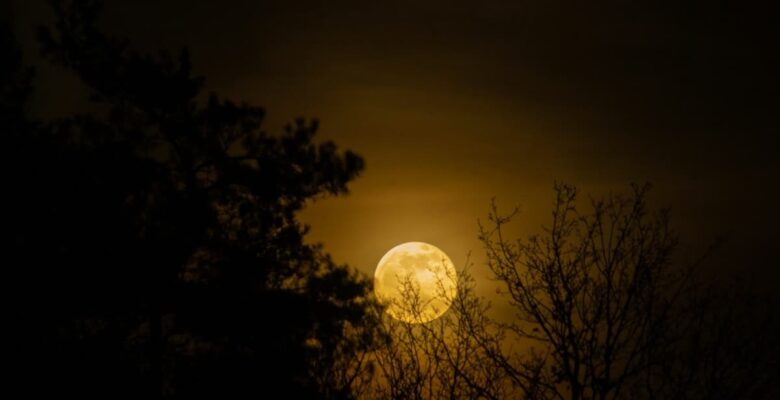
A full moon hike with kids can change that. Walk the same trail at night, and it looks like somewhere you’ve never been. And since you’re heading out after dinner, when the kids would usually be on screens or getting ready for bed, it can start to feel like an occasion.
This article contains affiliate links. We earn from qualifying purchases.
The walking part is rarely what goes wrong. Most families manage that fine. Whether your kids ask to come back next month depends far more on what you do together once you’re out there, which is why it’s worth planning a few small rituals along with the route.
Why the Moon Gives the Walk Its Meaning
Moonlight changes a landscape in a few ways:
- Colors fade to shades of grey and silver.
- Small details like leaves and bark disappear.
- What’s left is mostly outlines: trees, rocks, the person walking ahead of you.
With less to look at, kids tend to stop scanning for every detail and start listening instead. Many parents notice that even their most restless kids slow down a little in the dark.
Almost every culture on Earth has its stories about the full moon. Search “full moon meaning,” and you’ll find dozens of explanations within a minute, many of them academic, and none of them telling a parent what to do with two kids at seven o’clock on a Tuesday.
A conversation can turn all that reading into a plan for one evening. For instance, you can connect with a psychic who specializes in lunar traditions and ask what this month’s moon has traditionally stood for. You’ll usually come away with one theme, and that’s all an evening needs. Many psychic readers can also explain how older customs were practiced and how to scale them down to something a six-year-old can join in. Keep whatever suits your household and drop the rest.
If you’d rather start on your own, the moon’s traditional name is a good source of ideas. For example, October’s Hunter’s Moon was tied to preparing for winter, so gratitude for the year so far is an easy theme.

Planning the Hike So the Evening Works
A full moon rises around sunset, so first check the local moonrise time and start the hike about 30 minutes later, once the moon has cleared the treeline.
Starting then avoids two problems:
- Leave too early, and everyone stumbles around in the dim light.
- Wait too long, and younger kids grow exhausted.
In late autumn and winter, sunset comes early, so the full moon rises in the late afternoon or early evening, which makes those months easiest with little ones. Winter full moons also climb higher in the sky than summer ones and light the trail better.
The moon looks full for about three nights, so if the full moon falls on a school night or a cloudy one, go the evening before. That night it rises a little earlier, often before sunset.
When planning night hiking with kids, pick a route the family already knows from daytime walks. The trail your kids got bored of is ideal. When nobody has to think about directions, everyone can focus on the walk itself.
Wide, flat trails work best, since roots and rocks are hard to spot even under a bright moon.
Keep the distance short. A mile out and back is plenty for most families, and it leaves energy for the stops along the way. Bring red-light headlamps for emergencies (red light won’t ruin everyone’s night vision), pack an extra layer for each person, charge your phone, and let someone at home know your route.
Also check that the trail is open after dark, since many parks and open spaces close at sunset. At the trailhead, give your eyes 10 to 15 minutes to adjust before you set off. Your eyes keep adjusting for 20 to 30 minutes, so the trail will look clearer as you go.
🥾 My #1 App for Finding Family Friendly Trails:
Every hike we take, whether it’s a quick afternoon trail or a full day adventure, starts with AllTrails. It’s the world’s most popular platform for outdoor exploration, with a global community of millions and over 450,000 curated trails to search by location, difficulty, and length.
Step 1: Download AllTrails for free here. The free version already gives you the trail database, reviews, photos, and basic maps, everything you need to pick a trail your family will actually enjoy.
Step 2: If you hike often, AllTrails+ is worth the upgrade. For $35.99 a year (with a 7 day free trial), you get offline maps, off route alerts, printable maps, and an ad free experience, features that matter most once you’re out of cell service with kids in tow.
It’s the one app I recommend to every family asking where to hike next.
Starting With an Intention at the Trailhead
The start of the hike is the best moment for this, while everyone is still together and no one has wandered ahead. Ask each person to say one thought out loud that connects to the evening’s theme. Think of it as a small intention for the walk.
Say this month’s theme is release. Each person could name one habit they’d be happy to leave behind, like hitting snooze five times or snapping at a sibling. With younger kids, gratitude is often an easier place to start. One good thing from the week is enough, even something as small as a nice lunch at school.
Try to keep your answer to a sentence or two. Give a long, thoughtful speech and the kids will either copy it or tune out (usually the second).
Rituals for the Walk Itself
Once you’re walking, a few full moon activities for kids, keep the whole group paying attention. Here are four to try:
Walk a silent stretch
Choose a stretch of trail, say up to the next bend, where nobody talks. Once the chatter stops, kids start hearing things they’d normally miss: wind in the trees, their own feet crunching on gravel, and maybe even an owl. Later, they’re usually bursting to tell you what they heard.
Do a three-senses check
Stop somewhere open and ask everyone to name one thing they can see, touch, and smell. It takes about two minutes and brings attention back to the trail. This is a shortened version of the 5-4-3-2-1 grounding exercise used in mindfulness practice.
Hunt for moon shadows
On a clear night, a full moon is bright enough to cast shadows. Find an open patch of ground and let the kids hunt for their moon shadows. Younger children are often amazed that the moon can do this at all.
Study the moon’s face
And of course, look at the moon properly. Most of us glance at it and keep walking. Settle somewhere with a clear view and tell your kids that the same side of the moon always faces Earth, so every generation before them has looked at this exact face. Fewer than 30 people, all of them astronauts on lunar missions, have ever seen the far side with their own eyes. Many tweens find that more fascinating than you’d expect.
Pick two of the four. Pack the evening with activities, and it starts to feel like a school trip.
Closing the Evening Properly
The end of the walk shapes what kids remember. If the night ends the moment you reach the car, it can feel abrupt.
Bring a thermos of hot chocolate with you and pour it before anyone climbs in. As you drink, go around once more and ask each person what they noticed tonight that they’d have missed in daylight. Those answers tend to be better than anything from the opening round, as by then everyone has something real to describe.
Keep a small notebook or a nature journal in the car and write down everyone’s answers before you drive home. After 12 full moons, you’ll have a year of evenings in one place, and that little notebook will likely outlast any photo from the trail.
Plan Your Next Full Moon Walk
A full moon comes around about every 29½ days, so your family could have 12 or 13 of these evenings a year. Each one has a traditional name, too, like January’s Wolf Moon or November’s Beaver Moon. Checking when the next one falls and what it’s called is an easy way to get kids interested. Look up the next moonrise time, pick a theme, and put the date on the family calendar.
For more on hiking with kids, see these articles:

Leave a Reply